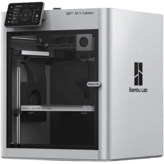
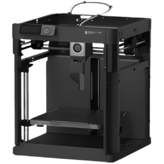
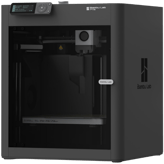
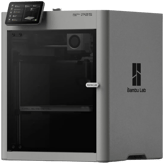
QIDI Q2 Reviews: See Why 0 Shoppers Rated It 0 Stars!
It’s not just hype. The QIDI Q2 3d printer earned its 0/5 from 0 real users. But what’s behind those stars?
 Supermod
  Moderator
 Recaptor
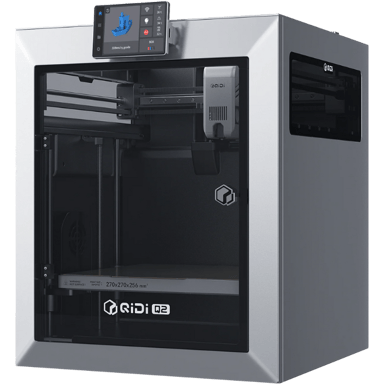
 QIDI Q2 3D Printer Review: A Strong Choice for Advanced Educational Use
When diving into the world of 3D printing, particularly for educational and engineering purposes, the right printer can make all the difference. The QIDI Q2 3D printer arrives with a clear mission: to serve advanced users in educational settings who require precision, reliability, and advanced features. Based on its engineering data, it offers a compelling blend of robust specifications and thoughtful design geared toward users comfortable with more involved assembly and operation. This model stands out within the FDM/FFF printer category, especially when measured against features such as its build volume, resolution precision, and safety certifications, which collectively frame its value proposition effectively for its intended audience.
Detailed Specs & Features
On paper, the QIDI Q2 packs a considerable punch in specifications. It features a build volume of 10.63 inches in both width and depth, and a build height of just over 10 inches, providing a generous working space ideal for complex educational projects or detailed engineering prototypes. The FDM/FFF technology used here remains a staple in precise, layered printing and supports filament diameters of 1.75mm, compatible with a wide range of materials, including third-party options. The printer's max extruder temperature hits 698°F, allowing it to handle more demanding materials like HIPS filaments with ease.
Complementing this is the heated chamber, which can maintain a controlled temperature up to 149°F ; a critical factor in reducing warping and improving overall print quality. The QIDI Q2 is well-equipped with hardware features designed for streamlined performance, including a 4.3-inch touchscreen display with a resolution of 480x272pixels. User interaction is made intuitive, supported by enhanced safety elements like CE certification, an emergency stop button, and overheat protection, ensuring peace of mind during longer print jobs. Additionally, a carbon-based air filtration system contained within a closed enclosure promotes safer operation and environmental control, crucial in educational settings.
Design & Build
The CoreXY frame type offers a sturdy yet efficient motion system relying on belts, contributing to precise movement and reduced vibration; two fundamental aspects that help achieve consistent print quality. With a relatively compact footprint at 15.83 inches wide and nearly 20 inches tall, it balances workspace convenience with a substantial build volume. The inclusion of lighting inside the build chamber, a removable textured PEI build plate with automatic and manual leveling options, and a built-in camera for remote monitoring all emphasize user convenience without compromising on functionality. Such a setup supports smooth assembly and operation, ideal for technically savvy educators and enthusiasts willing to engage deeply with their equipment.
Performance
Performance-wise, the QIDI Q2 lists an official max print speed of 600 mm/s, though real-world effective speeds are typically lower to maintain quality. Its layer resolution ranges from 100 to 300 microns, enabling fine detail in printed parts. Given the reported print accuracy of 100 microns, the model promises excellent fidelity necessary for engineering applications. Features like print recovery, filament runout sensor, and spaghetti/fault detection enhance reliability and minimize waste, which is critical in busy educational environments. Users can expect a quality rating deemed "Good," which, considering the specifications, signals robust, consistent output. The PEI print adhesion type ensures printed parts stick firmly during the job but remain easy to remove once complete.
Extra Features
The QIDI Q2 also supports essential connectivity options, primarily via USB and Wi-Fi, offering flexible file transfer methods. It works seamlessly with popular slicing software such as PrusaSlicer and supports the STEP file format, favored in engineering contexts for its precision. Furthermore, the printer includes firmware update capabilities and time-lapse recording, adding to its user-friendly software environment. While it lacks more advanced cloud-based or multi-printer fleet control features, it is well-suited for individual or small-scale institutional use. The printer's internal power supply supports 100-240 volts with a power consumption rating of 630 watts, which is typical for devices in this performance tier and indicates reasonable energy efficiency.
Pros & Cons
Pros
- Strong build volume combined with high print accuracy.
- Advanced safety and firmware features, including overheat protection and an emergency stop button.
- User-friendly touch interface with remote monitoring and built-in camera.
- Heated chamber and high extruder temperature allow versatile filament use.
Cons
- The assembly type is a kit, which could be challenging for less experienced users.
- Limited connectivity options; no advanced multi-printer or cloud management.
- No multi-material printing or resin support restricts versatility.
Price & Value for Money
Priced at $499 at QIDI3D.com, the QIDI Q2 offers notable value given its warranty period of one year and robust power supply voltage support. For advanced educational users and engineers, this price point reflects a balance between professional capabilities and accessibility. Users seeking a solid, versatile FDM printer don't have to pay premium prices to get a comprehensive feature set that includes safety-related design points and a well-considered user interface. That said, beginners or those seeking economical plug-and-play solutions might find the kit assembly and limited connectivity options less appealing.
Quick Take
In short, the QIDI Q2 delivers a strong combination of volume, precision, and safety features that empower advanced users in academic and engineering fields. Its core strengths lie in its build capacity and detail accuracy, supported by thoughtful hardware like a heated chamber and effective filtration. If we look at the numbers alone, this printer positions itself as a dependable yet fairly priced tool for serious 3D printing projects.
Closing Recommendation
The QIDI Q2 may be ideal for advanced users with prior 3D printing knowledge who want a flexible and precise machine for complex educational tasks or engineering prototypes. It appears to perform best when operated by those willing to invest time in setup and calibration to leverage its full potential. This printer helps users achieve high-quality, reliable prints with built-in safety measures that instill confidence in a busy educational or workshop setting.
Verdict
Rating: Based on the specifications and overall feature set, we believe QIDI Q2 deserves 4.4 out of 5.
- Winner Feature => Precise temperature control paired with a heated chamber caters to versatile, high-quality prints.
- Needs Improvement => Limited connectivity and no multi-material or resin printing restricts some advanced applications.
Reviews 0
The good, the bad, and the brutally honest.Average Rating

More 3D Printers 453
Unlock more awesome finds.